 EN

Motorcycle touring demands gear that can withstand unpredictable weather, rough terrain, and extended travel across varied climates. A waterproof duffle bag has become essential equipment for riders who need reliable storage without compromising durability or accessibility. Unlike standard luggage, a waterproof duffle bag specifically engineered for motorcycle use provides protection against rain, dust, and moisture while maintaining the flexibility and weight distribution that long-distance riders require. This comprehensive guide explains why selecting the right waterproof duffle bag transforms your touring experience and what features distinguish professional-grade options from generic alternatives.
Wholesale markets offer significant value for motorcycle touring operations, rental services, and adventure outfitters who equip multiple riders. A waterproof duffle bag purchased through wholesale channels provides cost efficiency without sacrificing quality, allowing businesses to maintain consistent inventory while reducing per-unit expenses. Understanding capacity, material construction, attachment systems, and weather sealing ensures that bulk purchases deliver genuine performance across diverse touring scenarios rather than simply meeting a price point.
Why Waterproof Duffle Bags Matter for Motorcycle Touring
Environmental Protection and Content Preservation
Motorcycle touring exposes gear to continuous weather exposure that stationary travel never encounters. A waterproof duffle bag prevents water infiltration during rain, stream crossings, or morning dew conditions that corrode electronics, damage clothing, and compromise camping equipment. The sealed construction of a quality waterproof duffle bag protects valuable items including cameras, documents, medications, and technical gear that touring riders cannot afford to lose. Weather sealing also prevents salt spray corrosion for coastal routes and sand infiltration in desert conditions, extending the lifespan of everything stored inside.
Rider Accessibility and On-Road Functionality
Unlike rigid cases that require secure mounting infrastructure, a waterproof duffle bag offers flexibility for varied bike configurations and quick access during stops. A modern waterproof duffle bag incorporates reinforced handles, roll-top or zippered closures, and compression straps that secure loads without elaborate frame-mount systems. Riders can remove the waterproof duffle bag for fuel stops, accommodation checks, or campsite setup without tools or assistance, making it practical for solo touring across remote regions where maintenance facilities are scarce.
Construction Standards for Wholesale Waterproof Duffle Bags
Material Specifications and Durability Ratings
Professional-grade waterproof duffle bag materials typically feature reinforced polyester or TPU-coated fabrics rated for sustained UV exposure, thermal cycling, and abrasion resistance. Wholesale suppliers standardize construction using denier ratings between 600D and 1200D, where higher denier indicates thicker, more durable material capable of withstanding chain spray, boot contact, and luggage rack friction. The waterproof duffle bag seams must be sealed rather than stitched alone, as stitching punctures create water entry points that compromise the weatherproofing promise. Quality wholesale options include factory heat-sealed seams with reinforcing tape at stress points, ensuring that a waterproof duffle bag maintains integrity across thousands of miles of touring.
Closure Systems and Water Sealing Mechanisms
A waterproof duffle bag closure system determines whether water entry occurs during rain exposure or submersion scenarios. Roll-top designs with adhesive strips create increasingly sealed environments as material is folded, making them ideal for extended rain exposure. The waterproof duffle bag with traditional zippered closures requires weather stripping or gasket seals running the entire zipper length to prevent water wicking through the slider mechanism. Wholesale suppliers offer both designs, with roll-top waterproof duffle bag options providing superior sealing at the cost of slower access, while zippered waterproof duffle bag variants prioritize quick deployment for frequent touring stops where weather exposure is intermittent rather than continuous.
Sizing, Capacity, and Attachment Considerations
Volume Requirements for Touring Duration
Motorcycle touring distance directly correlates to waterproof duffle bag capacity needs. Weekend riders require 40–60 liter capacity in a compact waterproof duffle bag, while extended expeditions spanning weeks demand 100–120 liter capacity to accommodate layered clothing, camping systems, and technical equipment. The waterproof duffle bag weight distribution becomes critical on motorcycles, as underslung luggage affects handling differently than top-mounted bags. Wholesale suppliers typically stock multiple capacity increments, allowing businesses to match inventory to customer profiles rather than forcing compromises between minimalist riders and full-expedition outfitters.
Mounting System Compatibility and Security
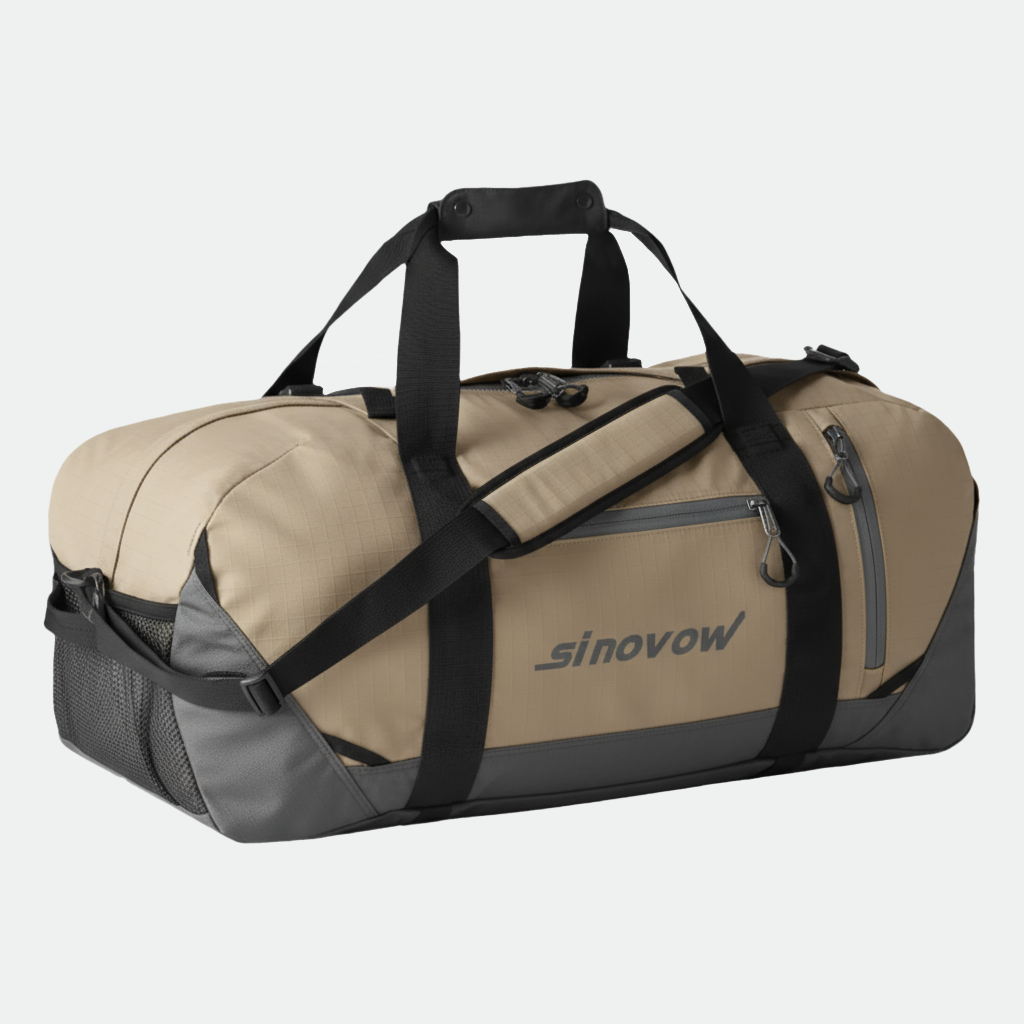
A waterproof duffle bag attaches to motorcycles through strapping systems, luggage racks, or inner-frame mounts that vary by bike model and routing preferences. The waterproof duffle bag construction must accommodate reinforced attachment points without tearing under dynamic load and vibration stress. Wholesale-grade options feature load-rated grommets, webbing anchors, and compression technologies that maintain bag position during acceleration, braking, and cornering. The waterproof duffle bag designed for touring incorporates grab handles positioned ergonomically for mounting and removal, reducing physical strain during multi-day trips where riders perform this operation dozens of times.
Selection Criteria for Bulk Procurement
Supplier Standards and Quality Assurance
Wholesale buyers of waterproof duffle bag inventory must verify supplier testing protocols, warranty coverage, and defect documentation processes. Reliable waterproof duffle bag manufacturers conduct hydrostatic pressure testing to certify sealing performance at specified depth equivalencies, providing objective performance data beyond marketing claims. The waterproof duffle bag purchase should include visible quality indicators such as consistent stitching patterns, uniform material coloration, and defect-free sealing. Wholesale agreements often include batch sampling, product certifications, and replacement provisions that protect against systematic manufacturing variations that could damage customer trust.
Cost Structure and Volume-Based Economics
Wholesale waterproof duffle bag pricing reflects volume commitments, material sourcing, and production timelines rather than individual unit markup. The waterproof duffle bag cost per unit typically decreases at 50-unit, 100-unit, and 500-unit volume thresholds, making procurement strategy important for rental operations or retail inventory planning. Storage facilities must accommodate larger waterproof duffle bag quantities without environment exposure that degrades polyester or weakens seal adhesive. The waterproof duffle bag inventory turnover affects holding costs, so wholesale buyers balance volume discounts against cash flow and storage requirements rather than maximizing per-unit savings at the expense of practical logistics.
FAQ
Can a waterproof duffle bag withstand river crossings and submersion?
A properly sealed waterproof duffle bag designed with roll-top closures can withstand brief submersion and extended water contact during river fords or boat transportation. However, full waterproofing depends on closure integrity and material condition. Even high-quality waterproof duffle bags should not remain submerged indefinitely, as seal adhesive deteriorates with prolonged water pressure. Touring riders typically use the waterproof duffle bag as primary protection while securing contents in waterproof inner liners for critical electronics, providing redundant protection during extreme water exposure scenarios.
How should a waterproof duffle bag be maintained after touring seasons?
A waterproof duffle bag requires rinsing with fresh water after touring to remove salt spray, dust, and environmental contaminants that degrade seals and fabric. Store the waterproof duffle bag in cool, dry conditions away from direct sunlight that fades material and weakens UV protective coatings. Inspect zipper sliders, attachment grommets, and seal adhesive periodically, applying waterproof lubricant to zipper mechanisms and allowing the waterproof duffle bag to air-dry completely before storage. This maintenance routine extends the usable lifespan of a waterproof duffle bag by 3–5 years compared to storage without preservation care.
What capacity waterproof duffle bag suits motorcycle touring beginners?
Beginning motorcycle touring riders typically benefit from a 50–70 liter waterproof duffle bag that accommodates essential gear without creating weight distribution challenges. A waterproof duffle bag in this range holds 5–7 days of clothing, basic tools, camping equipment, and documentation while remaining manageable for single-handed mounting and removal. As touring experience increases, riders often upgrade to a larger waterproof duffle bag or add supplementary storage, so starting conservative allows learners to develop packing efficiency before committing to premium bulk purchases.