 EN

The manufacturing of a reliable waterproof duffle bag requires precision engineering and advanced sealing techniques that go far beyond standard fabric stitching. Leading suppliers in the industry have adopted high-frequency welding as the primary method for creating seams that withstand extreme moisture exposure, pressure, and environmental stress. This technology transforms how waterproof duffle bag products are constructed, ensuring that travelers and professionals can trust their gear in harsh conditions. Understanding the welding process behind a waterproof duffle bag gives insight into why quality matters and what distinguishes premium bags from ordinary alternatives.

High-frequency welding has become the standard approach for manufacturers seeking to produce a waterproof duffle bag that meets international durability standards. Unlike traditional needle-and-thread methods, welding creates a permanent molecular bond between materials, eliminating the micro-gaps where water can penetrate. The process requires specialized equipment, trained operators, and rigorous quality control protocols. This article explores how suppliers execute high-frequency seam welding, the technical specifications involved, and why this manufacturing method is essential for creating a waterproof duffle bag that performs reliably in real-world scenarios.
High-Frequency Welding Fundamentals for Waterproof Duffle Bags
How High-Frequency Energy Creates Sealed Seams
High-frequency welding operates by applying radio-frequency energy to thermoplastic materials, generating heat that fuses layers together without compromising structural integrity. When manufacturers produce a waterproof duffle bag, they apply electromagnetic waves at frequencies between 13.56 and 27.12 megahertz directly to the material interface. The energy excites molecular chains in polyester and polyurethane coatings, creating localized melting that bonds adjacent layers into a single, continuous seal. This process produces a waterproof duffle bag seam that is stronger than the surrounding material itself, making the joint the least likely failure point during use.
The precision of high-frequency welding distinguishes it from adhesive bonding or ultrasonic methods. For a waterproof duffle bag to achieve true water resistance, every millimeter of the seam must achieve complete molecular fusion without burning through the fabric. Operators use pressure-regulated tooling and carefully calibrated dwell times to control depth and consistency. The resulting waterproof duffle bag exhibits uniform seam quality across thousands of units, meeting tolerance specifications that rigid quality systems demand.
Material Preparation Before Welding
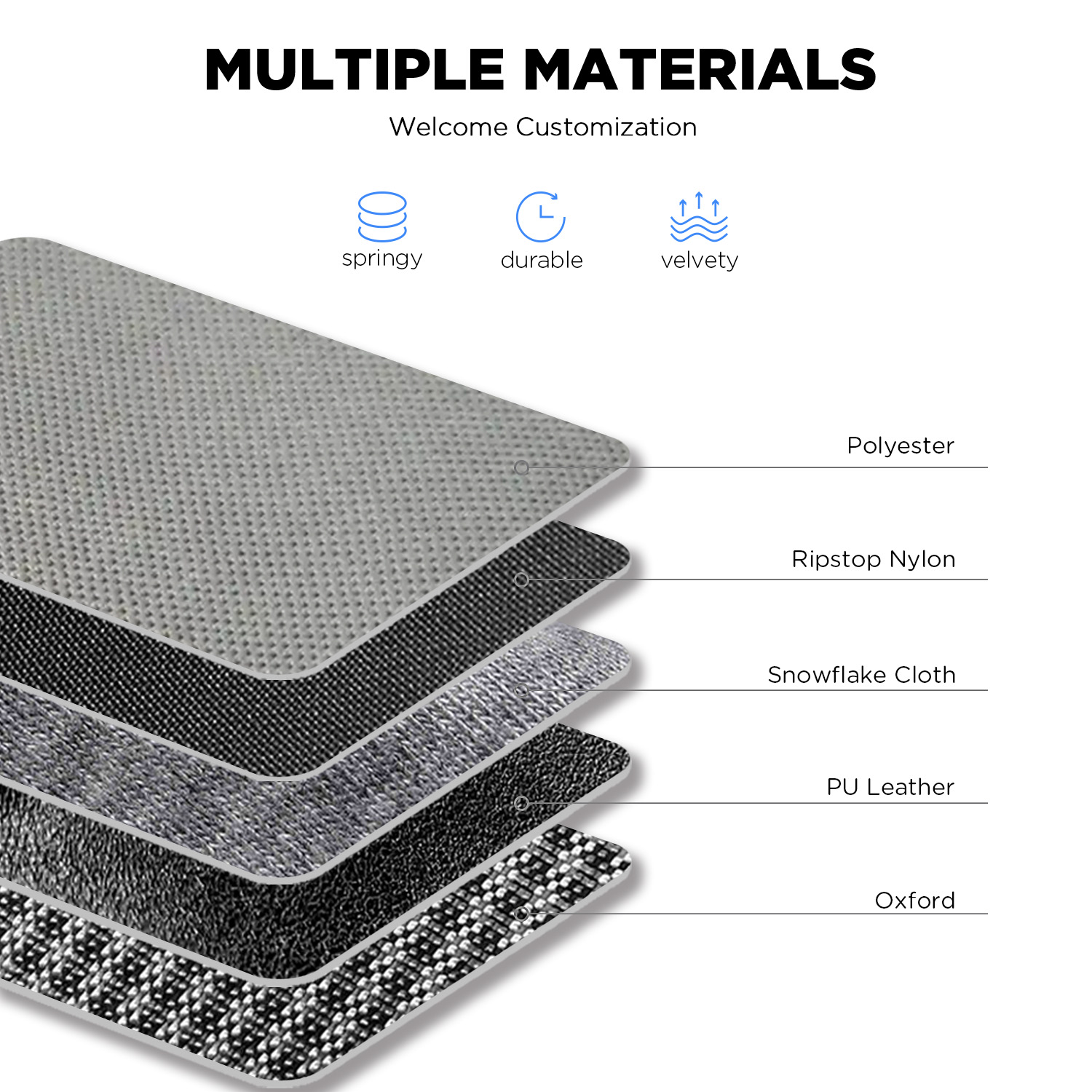
Before any welding begins, suppliers preparing a waterproof duffle bag must prepare materials with extreme care. The exterior fabric is typically a solution-dyed polyester coated with polyurethane or PVC to create the water-blocking layer. The interior may be nylon or cotton canvas for durability and comfort. Both materials must be perfectly clean, free from oils, dust, and moisture, as contaminants interfere with the welding process and weaken the resulting waterproof duffle bag seam. Manufacturers use specialized cleaning systems and humidity-controlled environments to maintain material consistency.
The fabric must also be positioned with millimeter precision before the welding electrode contacts it. A waterproof duffle bag manufacturer uses automated feeding systems or skilled hand-positioning to ensure that the seam line runs exactly where design specifications require. Any misalignment results in either incomplete sealing or unwanted material damage. Premium waterproof duffle bag producers employ vision-guided systems that verify material placement before the welding sequence begins, guaranteeing that each completed bag meets design standards.
The High-Frequency Welding Process for Seam Creation
Equipment Configuration and Operating Parameters
A modern high-frequency welding machine for producing a waterproof duffle bag consists of a power supply, dielectric heating chamber, pressure system, and cooling mechanism. The power supply generates consistent radio-frequency energy, typically in the 2 to 5 kilowatt range for bag manufacturing. The dielectric heating chamber houses the welding electrode, shaped to match the desired seam profile. For a waterproof duffle bag, electrodes are often contoured to create reinforced seams at stress points like corners and handle attachments, adding structural support where the bag encounters maximum strain.
Pressure applied during welding directly affects the quality of the resulting waterproof duffle bag seam. Too little pressure leaves gaps; excessive pressure burns through materials and weakens the fabric. Suppliers typically apply 100 to 300 pounds of pressure, depending on material thickness and welding time. Dwell time—the duration the electrode remains in contact with the material—ranges from 0.5 to 3 seconds for a waterproof duffle bag, varying based on material composition and seam width. Operators monitor these parameters continuously, adjusting settings to maintain consistency throughout production runs.
Cooling and Setting the Weld
After the welding electrode retracts, the newly sealed waterproof duffle bag seam must cool under controlled conditions to maximize strength. Most manufacturers use air cooling or water-cooled tooling to reduce the welded area temperature rapidly, allowing the thermoplastic bond to solidify without distortion. The waterproof duffle bag seam undergoes rapid molecular re-crystallization during this phase, locking in the fused structure. Premature removal or flexing during cooling compromises the waterproof duffle bag integrity, so many suppliers use automated handling systems that keep finished seams stationary for 10 to 30 seconds post-welding.
Some advanced manufacturers employ secondary cooling systems that circulate chilled water through the electrode or press plates, accelerating the waterproof duffle bag production cycle while improving seam quality. This technique is particularly valuable when manufacturing waterproof duffle bag models with extensive seaming, where production volume demands faster throughput. The controlled cooling ensures that the waterproof duffle bag maintains dimensional stability and that the seam remains flexible enough for actual use without becoming brittle or prone to cracking over time.
Quality Assurance and Performance Testing
Inspection Methods for Welded Seams
Quality control for a waterproof duffle bag begins immediately after welding, with operators performing visual inspections for surface defects, burn marks, or incomplete fusion. Every waterproof duffle bag undergoes dimensional verification to ensure seams align with technical drawings. Advanced suppliers use automated optical systems that photograph each waterproof duffle bag seam and compare it against reference standards, flagging deviations for human review. This dual-layer inspection approach catches defects before they reach customers, protecting both brand reputation and end-user safety.
Destructive testing complements visual inspection by validating the structural integrity of a waterproof duffle bag at random intervals. Quality teams cut sample seams from production runs and perform peel tests, measuring the force required to separate the welded layers. A properly executed waterproof duffle bag seam typically requires 10 to 20 pounds of force per inch to pull apart—significantly stronger than the surrounding material. Burst tests pressurize the waterproof duffle bag from inside, simulating extreme load conditions and verifying that welded corners and seams remain intact without rupturing or leaking.
Water Resistance Validation
Every production batch of a waterproof duffle bag undergoes immersion testing to verify actual water resistance. Sample bags are filled with dry material, sealed, and submerged in water for extended periods—typically 24 to 48 hours. After removal, the contents are inspected for moisture penetration, confirming that the waterproof duffle bag design and welding execution genuinely prevent water ingress. Suppliers often conduct this testing at elevated temperatures and pressures that exceed normal use conditions, ensuring a safety margin in the waterproof duffle bag performance guarantee.
Some manufacturers employ salt-fog testing and UV exposure trials to verify that a waterproof duffle bag remains water-resistant after extended environmental stress. These accelerated aging protocols simulate months of real-world exposure in a matter of days, revealing potential degradation in the waterproof duffle bag materials or seams. Premium suppliers maintain test documentation for every production run, demonstrating compliance with international standards like ISO 2880 or military specifications like MIL-D-3286, providing customers with verified confidence in their waterproof duffle bag investment.
Why High-Frequency Welding Matters for Waterproof Duffle Bag Reliability
Advantages Over Traditional Sealing Methods
Traditional stitched seams create puncture points where water can enter a waterproof duffle bag, making high-frequency welding superior for moisture protection. Adhesive bonding requires careful surface preparation and can degrade when exposed to UV light or temperature extremes; a waterproof duffle bag sealed with adhesive alone rarely maintains integrity beyond 2 to 3 years. Welded seams, by contrast, create permanent molecular bonds that strengthen over time as the thermoplastic fully crystallizes. A waterproof duffle bag manufactured with high-frequency welding typically maintains full water resistance for 5 to 10 years of active use, making it a better value for customers despite higher initial production costs.
The speed and scalability of high-frequency welding make it economically practical for producing a waterproof duffle bag at competitive prices. Unlike hand-stitching or complex adhesive processes, welding equipment can be automated, reducing labor costs and increasing consistency. A single operator can oversee multiple welding stations, each producing 50 to 100 completed waterproof duffle bag units per day. This efficiency allows manufacturers to invest in quality control measures that further differentiate their waterproof duffle bag offerings from lower-cost alternatives.
Customization and Advanced Applications
Modern waterproof duffle bag suppliers use programmable electrode configurations to create specialized seam patterns that address specific use cases. Reinforced corner seams prevent stress cracking where a waterproof duffle bag undergoes repeated flexing. Extended seams along load-bearing zones add structural support without adding weight. Some manufacturers integrate sealed compartments into the waterproof duffle bag design by welding internal partitions, creating waterproof storage for electronics or documents while maintaining overall bag capacity. This flexibility in welding application demonstrates why high-frequency technology has become the industry standard for premium waterproof duffle bag manufacturing.
Military and expedition-grade waterproof duffle bag suppliers frequently employ dual-sealed seams, applying the welding electrode twice along critical edges to ensure absolute water impermeability. While this adds production time, it creates a waterproof duffle bag capable of withstanding sustained underwater exposure or extreme precipitation. Industrial and commercial users—from construction crews to emergency response teams—depend on this level of reliability, making the investment in advanced welding technology essential for suppliers serving these demanding markets.
FAQ
What temperature does a waterproof duffle bag seam reach during high-frequency welding?
During the welding process, the interface between materials in a waterproof duffle bag reaches temperatures between 200 and 300 degrees Fahrenheit, depending on power settings and material composition. This heat is sufficient to melt the thermoplastic coating without degrading the underlying polyester or nylon fabric. The waterproof duffle bag cooling phase is critical because it allows the molten material to solidify into a strong, permanent bond. Operators monitor temperature through thermal imaging or resistance sensors, adjusting power output to maintain consistency across the waterproof duffle bag production line.
Can a waterproof duffle bag welded seam be repaired if it fails?
In most cases, a damaged waterproof duffle bag seam cannot be fully restored to original strength through traditional repair methods, though temporary fixes are possible. If a waterproof duffle bag develops a small leak, users can apply waterproof sealant or specialized fabric adhesive as a temporary solution. However, the definitive repair requires re-welding by a qualified technician with access to the same high-frequency equipment used during manufacturing. This is why premium waterproof duffle bag manufacturers offer extended warranties and repair services, ensuring that customers can address damage quickly and professionally rather than attempting DIY solutions that may compromise the bag further.
How do suppliers ensure consistent welding quality across large production runs of waterproof duffle bags?
Consistent quality in a waterproof duffle bag manufacturing requires real-time monitoring, regular equipment calibration, and statistical process control. Suppliers log every parameter—power output, pressure, dwell time, and electrode temperature—for each waterproof duffle bag produced, creating a digital record traceable to specific production dates and serial numbers. Automated inspection systems photograph every waterproof duffle bag seam, comparing it against established quality thresholds. Regular maintenance prevents equipment drift, and periodic recalibration ensures that the waterproof duffle bag meets specifications throughout the production cycle. This data-driven approach allows manufacturers to identify trends before quality degradation becomes visible, protecting the integrity of every waterproof duffle bag that leaves the facility.